Sunday, May 17, 2009

All This, and Bugs Bunny Too

Today’s Sunday Brunch blog features an unusual book dedication, discusses the invisible role of editors, and explores the connection between Rachel Field and two cartoons -- one famous, the other banned.

“THOUSANDS OF CANDLES CAN BE LIT FROM A SINGLE CANDLE”

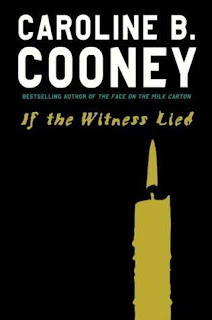
On Friday I picked up a copy of Caroline B. Cooney’s latest young-adult thriller, IF THE WITNESS LIED. I’ve never found Ms. Cooney to be a particularly “literary” author and I’m frequently disappointed by how unlikable her protagonists can be...but there is no denying that she’s a versatile writer, expert at building suspense to a page-turning climax. Her books are always full of twists and surprises. This volume, which features a lone candle on the cover, contained a surprise before the story even began. It seems like only yesterday when I heard the sad news that two librarians were killed in a car accident while attending the American Library Association's convention in Denver. I did not know Kate McClelland and Kathy Krasniewicz, but as I read tributes from their friends and colleagues in the days after their deaths, I learned they were much-respected, valued members of the children’s book community. This past Friday night, I opened IF THE WITNESS LIED to the dedication page and found this tribute from Caroline B. Cooney:
When I was in high school and people knew me as Kitty Bruce, I was a page at the Perrot Memorial Library in Old Greenwich, Connecticut. Many years later, my nephew Ransom Bruce was also a page there. I loved the library -- the graceful curving white marble stairs, the wood-paneled children’s room, the back stacks. I learned the Dewey decimal system, which was like a special language, and often when I recall some book from my childhood, I see its position on the shelves of the Perrot library. I’ve moved several times over the years, and I have used and enjoyed many libraries and admired many librarians, but there will always be a special place in my heart for my first love: the Perrot Memorial Library.

This book is dedicated to two of its wonderful librarians, whose early deaths are such a loss: Kate McClelland and Kathy Krasniewicz.


I was very much surprised to see this dedication because barely three months have passed since the untimely deaths of these librarians. Normally the publishing world moves at glacial speeds, so it would seem a real effort was made to honor Kate McClelland and Kathy Krasniewicz this expeditiously on these pages.

And of course what better place to keep their candle burning than in a book for young readers?


SPRING FEVER

One of my favorite books from 2007 was EMMA-JEAN LAZARUS FELL OUT OF A TREE by Laura Tarshis. Now its pragmatic protagonist is back with a second story, EMMA-JEAN LAZARUS FELL IN LOVE, in which Emma-Jean, her mother, her seventh-grade classmates, and even a couple of their teachers seem to be suffering from spring fever. Though solitary Emma-Jean has recently been accepted by a group of friends, she remains a logical, analytical character with a flat affect (adult readers may suspect she has Asperger’s syndrome) who is surprised to suddenly experience an “odd fluttering in her heart” when she thinks about Will Keeler. Meanwhile, classmate Colleen has received an anonymous love letter and asks Emma-Jean to help identify her secret admirer. In many ways it’s Colleen who grows and changes the most in this brief novel, finding that just the idea of someone liking her makes her feel “taller, braver, stronger...Colleen-er.” And even after the truth about her secret admirer emerges, Colleen retains this newfound strength and resilience. Emma-Jean continues to be one of the most intriguing characters in recent middle-grade fiction -- by turns perceptive, earnest, helpful, impractical, and likable -- as she slowly grows to accept her new friends' flowery scents, sparkly clothing, casual “love yous!” and even a group hug at the Spring Fling dance. The plot of this novel may not feel quite as fresh and eccentric as the time Emma-Jean fell out of the tree (a deus ex machina solution to one problem seems particularly contrived) but on the whole EMMA-JEAN LAZARUS FELL IN LOVE is a warm and welcome addition that will satisfy fans of the series.

EMMA-JEAN LAZARUS FELL IN LOVE
by Lauren Tarshis
Dial Books for Young Readers, 2009

FIRST EDITION POINTS: $16.99 on dustjacket flap
Descending number code on copyright page: 10 9 8 7 6 5 4 3 2 1

WHY THE BOOK MAY BE COLLECTABLE: EMMA-JEAN LAZARUS FELL OUT OF A TREE was a critical and popular success. If the series should really take off, these early books will be difficult to find.

Lauren Tarshis is at the beginning of her career as a writer. Based on the quality of her first two books, even bigger things are on the horizon. If so, these early titles will be especially valued.

DIFFICULTY IN FINDING FIRST EDITIONS: No problem at all right now -- but ask me again in a few months....

ANOTHER FINGERPRINT

Investigating the identity of Colleen’s secret admirer, Emma-Jean Lazarus discovers a clue on an anonymous note: a fingerprint.

Well, I just found a fingerprint in my copy of TALES FROM OUTER SUBURBIA, but I know who left it.

Author Shaun Tan, who lives in Australia, recently made a rare trip to United States to promote his books. My east coast friend attended one of the signings and kindly got an inscribed copy of the book for me.

As you can see in the image below, Mr. Tan signed the book with a fingerprint, which he turned into a flower:


I am especially pleased to have a signed copy of TALES FROM OUTER SUBURBIA, as it’s one of my favorites for 2009. I’m frankly surprised that this endlessly inventive volume -- a stunning mix of oblique prose and color artwork in a huge variety of styles -- isn’t getting a lot more buzz. At this early point in the year, it’s my pick for the Printz...with or without fingerprintz.


INVISIBLE EDITORS

With the recent layoffs in publishing, I’ve been thinking a lot about the role of editors.

There's no doubt that the world of blogs and websites have made today's editors much better known to the public. For example, you might look up a favorite author’s blog and find pictures of your author clinking champagne glasses with her editor at some literary bash; you might go to a children’s book website and read a speech that an editor delivered at a conference -- or even watch it on Youtube. This is a far cry from the days when editors remained pretty much “invisible.” Of course there have always been a few “celebrity editors” (we’ve all heard of Maxwell Perkins) and I guess anyone with an interest in children’s books knows which titles Ursula Nordstrom edited during her illustrious career.

But just glancing over at the books of my shelves right now, I have to say that I don’t know, offhand, who edited A WRINKLE IN TIME by Madeleine L’Engle...DICEY’S SONG by Cynthia Voigt...ISLAND OF THE BLUE DOLPHINS by Scott O’Dell.

I don’t know who edited Dr. Dolittle or Henry and Ramona or the Melendys.

I’m not saying this information isn’t available on the web on in reference books; I’m just pointing out how many “invisible editors” are out there -- some of whom published our favorite books -- yet most of us still don't know their names. Odd, isn’t it?

But at least these men and women had the pleasure of a job well done when they saw the books they edited win awards, become bestsellers, be embraced by young readers.

But think about the editors who can’t even claim that. They may have changed lives and influenced literary history without even knowing it.

Many years ago, when Rachel Field was starting her career, she sent her first adult novel to a number of major publishers. No one was interested, but a number of editors wrote back and said that the early part of the manuscript, which covered the protagonist’s childhood, was the strongest part of the book. They suggested that she try writing for children.

Who were these perceptive editors?

I suppose their names are lost to history at this point. Do you think they ever knew that an unpublished author they once rejected actually took their advice and began writing for young readers? Do you think these invisible editors ever realized they were tangentially responsible for children’s classics such as HITTY, HER FIRST HUNDRED YEARS, CALICO BUSH, and PRAYER FOR A CHILD?


ALL THAT, AND ADULT BOOKS TOO

Reading about Rachel Field, I’m fascinated that she is one of the few authors who enjoyed equal success in both children’s books and adult fiction. After her amazing success in children’s books, she again attempted writing adult novels and ended up having big bestsellers with TIME OUT OF MIND (1935), AND NOW TOMORROW (1942) and especially ALL THIS, AND HEAVEN TOO (1938.) I guess she eventually learned how to make the adult sections of her novels as strong as the childhood scenes. Her best-known adult book, ALL THIS, AND HEAVEN TOO, with its oft-quoted opening line ("Dear Great-Aunt Henriette, Although I never knew you in life, as a child I
often cracked butternuts on your tombstone”) was based on a episode from Ms. Field’s family history. It was made into an Oscar-nominated motion picture in 1940 -- one of my favorites -- starring Charles Boyer and Bette Davis. I love this advertisement for the movie because it emphasizes the film’s literary origins. I doubt you’d see that today. And how cool is it that Bette Davis seemed to be familiar with Rachel Field’s books for young readers as well? In a book written thirty years later, Davis reminisced about filming ALL THIS, AND HEAVEN TOO and said of Rachel Field: “She also wrote many books for children. They are classics as far as I’m concerned.”


ALL THIS AND RABBIT STEW

Incidentally, ALL THIS, AND HEAVEN TOO was such a bestseller that its title entered the lexicon. In 1941, a Bugs Bunny cartoon was called:


This comic film -- which featured Bugs facing off against an African American hunter -- was eventually banned from television because it employed severe racial stereotyping. There was even a minor conflict involving nudity/sexuality, as the cartoon ends with the hunter losing his clothes and wearing only a fig leaf. In the final seconds of the movie, Bugs reaches over and tries to yank off the fig leaf. Many TV stations edited that out -- even while continuing to run the racially insensitive story -- until the whole thing was banned in 1968. Although Rachel Field had nothing to do with that Bugs Bunny cartoon, she was involved with one Disney animated feature. While in Hollywood making ALL THIS, AND HEAVEN TOO, she was permitted to view some of the footage for Walt Disney’s FANTASIA. She was so moved by the “Ave Maria” sequence that she wrote a poem based on the music and imagery. It was later published as a stand-alone book, illustrated with film stills -- most of which were not used in the completed movie. There is currently a copy of this book on sale signed by both Walt Disney and Rachel Field...for $4000.


BUT IF YOU REALLY WANT TO COLLECT RACHEL FIELD....

...and don’t have an extra $4000, it’s good to know that Ms. Field signed lots and lots of books during her career -- far more, it seems, than most other children’s authors of the time. So copies are out there. What I’m now looking for are specially illustrated items from Ms. Field. I understand that she designed her own Christmas cards, which are highly valued by many collectors. So if you happen across any cards signed “Rachel Field” or “Arthur and Rachel Pederson” (her married name), they may be valuable.

I’ve also heard that Rachel Field would give special friends copies of her own books with all the pen-and-ink line drawings hand-colored by herself.

...So if you ever come across a copy of HITTY or any other Rachel Field volume at a used bookstore and the pictures have been painted, don’t say, “Some dumb kid colored-in all the pictures and wrecked this book!” Instead, remind yourself that you may actually have a Rachel Field original!

Thanks for reading my blog. Hope you’ll be back.

Tuesday, May 12, 2009

Pure and Applied Research about Henry Reed

When I was a kid, I wanted to spend my summers with Henry Reed in Grover's Corner, New Jersey.

I couldn't imagine anything more fun than helping Henry and his friend Midge douse for water, hunt for truffles, babysit bratty kids, and stage a big show. And who wouldn't want to accompany them on their riotous coast-to-coast road trip across the United States?

Created by author Keith Robertson (and aided by illustrator Robert McCloskey) Henry Harris Reed is an early teenager who has spent most of his life overseas because his father is in the diplomatic service. In the summer before eighth grade, he comes to visit his Uncle Al and Aunt Mabel in Grover's Corner, New Jersey, just outside of Princeton. It's a sleepy town of only nine houses, but Henry shakes it up when he opens his own business (HENRY REED, INC., 1958), specializing in "pure and applied research." With his new friend Midge Glass, the protagonist digs for oil, launches his pet beagle in a hot balloon, and (like another literary Henry before him, Henry Huggins) sells earthworms to fishermen. By the end of that busy summer, the name of the business has been changed from "HENRY REED, INC." to "REED AND GLASS ENTERPRISES, INC." Of course I used to wish it had been "REED AND GLASS AND SIERUTA ENTERPRISES, INC."

The following summer, Henry returns to the United States, touching down in San Francisco to join the Glass family on a road trip back to New Jersey (HENRY REED'S JOURNEY, 1963.) During the trek, they inherit a parakeet, visit Disneyland, get adopted by Hopi Indians, and make a stop at the Grand Canyon -- where Midge drops the family car keys over the rim. Every moment of the trip -- and the book -- is enjoyable, but I've always been disappointed by how truncated the journey is. Once Henry and Midge make it to Missouri -- barely halfway home -- the book reaches its conclusion and the rest of the trip is wrapped up in less than ten pages.

Many fans think HENRY REED'S BABYSITTNG SERVICE (1966) is the funniest book in the series. This story picks up right where JOURNEY left off, telling us about the remainder of Henry's second summer in the States as he and Midge begin a new business (no wonder they rushed home from that road trip!) At first the protagonist dismisses babysitting as "a sissy job," but is soon matching wits with his creepy little client Belinda Osborn, setting up a sixties-version of a day-care center, and getting even with a pair of teenage neighbors who are, in the words of Midge, "stuck up, rude, conceited, selfish, uninteresting, overbearing, loud, and dumb."

The following summer, Henry returns to Grover's Corner again (HENRY REED'S BIG SHOW, 1970) with the idea of becoming a stage director or producer. Less focused than the previous books, BIG SHOW has Henry and Midge toying with the idea of producing a music festival, a renaissance event, a play, and finally a rodeo. Although the earlier volumes are also products of their era (JOURNEY, for instance, features references to Tab Hunter), this book contains talk about Woodstock, protest marches and even a visit by long-haired musicians in a flower-covered vehicle performing a number called "Never Mow the Lawn When It's Wet." Strangely, these plot devices -- considered very contemporary at the time -- now make BIG SHOW the most dated book in the series.

Most of us assumed that the adventures of Henry Reed ended there, but author Keith Robertson surprised everyone with one final volume, HENRY REED'S THINK TANK, which was published in 1986, five years before the author's death. In this go-round, Henry and Midge set up a business to solve neighborhood problems, such as helping a girl who needs a bigger allowance and a chubby boy seeking approval from his father. The story is set at the end of the "big show" summer, which means Henry should be at least sixteen in this volume...but he is portrayed as if he were much younger. Perhaps the author realized Henry was growing up too quickly and wanted to find of way of keeping his series running a little longer.

These brief summaries of the books don't really convey what makes them so memorable. I think the success of Henry Reed can be attributed to several factors:

* The nonstop excitement and activity in each book. Henry and Midge seem to be at the center of every adventure that hits Grover's Corner -- in fact, they usually instigate it. What kid reading these books wouldn't want to be in the middle of all that fun?

* The character of Henry isn't purposefully funny. He rarely cracks jokes or acts silly. This bespectacled kid is practical, earnest, and has a deadpan approach to most of the hysteria going on around him as he studiously records these experiences in his journal. Because he seems so doggone serious he ultimately becomes the funniest character in the books.

* The illustrations by Robert McCloskey are the perfect match for Keith Robertson's prose. Two-time Caldecott winners don't illustrate many chapter books, so it's quite a big deal that Mr. McCloskey agreed to do this series. Even Keith Robertson said, "I don't think the books would have been nearly as successful if they hadn't had these illustrations."

Considering how popular this series once was, it's disappointing to realize that only HENRY REED, INC. and HENRY REED'S BABYSITTING SERVICE remain in print today -- and that's in paperback only. And I'm surprised by how little information I can find about these books. Details can be gleaned from an author profile here...an interview there...and even from a study of Robert McCloskey by Gary D. Schmidt...but there's still not a lot of information much out there.

But remembering that Henry Reed was always all about doing "pure and applied research," I still did my best to gather together ten interesting facts:

1) Most intriguing is that the character of Henry Reed was based on...a female fourth-grade teacher! According to Keith Robertson:

I always had in mind a female fourth-grade schoolteacher. It seems rather ridiculous, but we had a friend who taught school, and it always seemed that wherever she was, there was trouble. There was all sorts of activity, and things went wrong -- not her fault, of course. Just a turmoil!

Obviously, I couldn't write a book about a fourth-grade teacher and have children read it. I converted her into a boy, who was Henry, joined by a girl, Midge. Some incidents resemble what my children did in a similar area of New Jersey. Essentially, Henry is based on a fourth-grade teacher.


2)While Henry may have been based on a female teacher, his image seems to be a self-portrait by illustrator Robert McCloskey:


3) In the early pages of the very first book, Henry asks his uncle to call him "Hank" and that's what he's called by Uncle Al repeatedly through the series. Midge refers to him as "Hank" as well. Yet everyone (and that includes you, doesn't it?) thinks of him as "Henry." (I know I do!)

4) Robert McCloskey and the designer of HENRY REED'S BABYSITTING SERVICE had some fun with the name of the publisher, Viking, using a diaper pin for the letter "V" on the spine:


Kids who see the book at the library today probably have no idea what that pin represents. Aren't diapers now attached with double-sided sticky tape?

5) HENRY REED, INC. won a William Allen White Award, which is voted on by schoolchildren in Kansas. Mr. Robertson and his wife drove there for the award ceremony (could this have been the inspiration for Henry's Reed's upcoming road trip?) and then visited several schools. The last stop on the tour was Robertson's old hometown of Caney. But the author was stopped outside town by the chief of police. He didn't know what was happening until a high school band and baton-tossing majorettes suddenly appeared and marched in front of the car to his old grade school. He would later dedicate HENRY REED'S JOURNEY "To all Henry's Kansas friends who made him feel so welcome."

6) The dustjacket of HENRY REED'S JOURNEY referred to the book as "a unique Baedecker." I had no idea what that meant back when I was a kid (maybe another name for "trip," like "expedition" or "peregrination"?) In fact, I didn't find out what it meant until today when I Googled it. We didn't have the internet in the sixties and seventies. Plus I wasn't very bright.

7) Although all the books are presented in the form of journals written by Henry Reed, the author had originally intended to write part of HENRY REED'S JOURNEY from the perspective of Midge, but his editor -- the famous May Massee -- said that it didn't sound like a girl and made Mr. Robertson rewrite that section in Henry's voice instead.

8) Speaking of changes, HENRY REED'S BIG SHOW was originally titled HENRY REED'S GREAT RODEO.

9) Robert McCloskey was very unhappy with the appearance of HENRY REED'S BIG SHOW and told Gary Schmidt that the volume "looked like it came out of a Xerox machine." Even though he lived until 2003, Robert McCloskey never illustrated another book after HENRY REED'S BIG SHOW in 1970.

10) When HENRY REED'S THINK TANK was accepted for publication, Viking asked Robert McCloskey to illustate it, but he refused. The book was therefore published with no illustrations. However, the dustjacket by Gail Owens contains three notable errors. First, as a blog reader pointed out to me several months ago, the name of the town is wrong on the sign:


It's "Grover's Corner," not "Grovers Corners."

Secondly, according to the text of the books, this sign should not say:


but should have an "AND" instead of an ampersand.

Finally, how come Henry isn't wearing his glasses on the cover? They're his most distinguishing personal characteristic throughout the series!


Please don't tell me he went and got contacts.

I know these are minor details, but Henry Reed is a detail-oriented guy.

I wonder if he'll appreciate all this research I've done about him.

Hey, maybe there's still hope that he'll let me join his research business someday!

Sunday, May 10, 2009

Sunday Brunch for Mothers and Others

Today’s Sunday brunch contains the usual randomness on children’s books old and new, including a few special items for Mother’s Day. I’d also like to take this opportunity to wish any mom who’s reading this a very happy day -- especially mine. One of my mother’s favorite hobbies is finding typos, spelling mistakes, and grammatical errors in this blog. ...And she does find a LOT of them. It’s the perfect job for a mother: pointing out your mistakes but making you a better person in the process. I truely haate too thinnk how unreadible this bog wood be wihtout her kind asistance. Im very greatfull.

TEN CHILDREN’S BOOKS WITH "ENTITLED" MOMS

The Mummy Market by Nancy Brelis
The author only wrote one book -- but it’s near-perfect. Some editions are titled THE MOTHER MARKET -- probably because “mummy” misleadingly conjures up images from Ancient Egypt

Moon, Have You Met My Mother : The Collected Poems of Karla Kuskin
Over four decades of classic poetry in one classy volume.

The Inner City Mother Goose by Eve Merriam
Fowl character, foul language.

Mama, Do You Love Me? by Barbara M. Joosse
Such a popular book that it was republished in a “Tenth Anniversary Commemorative Edition.”

A Chair for My Mother by Vera B. Williams
Caldecott Honor and Reading Rainbow favorite.

Ramona and Her Mother by Beverly Cleary
Most paperback editions of this book feature a cover illustration of Ramona making a mess with a toothpaste tube, but I’ve always loved the dustjacket from the original hardcover, which captures a quiet moment between Mrs. Quimby and an unusually contemplative Ramona.

Mom, the Wolf Man, and Me by Norma Klein
When Norma Klein decided to write her first children’s book, she vowed to complete the novel by writing ten pages a day for ten days. This book was the result.

Mama by Lee Bennett Hopkins
The well-regarded poet took a rare foray into fiction with this novel, which contains autobiographical elements.

Mama Don’t Allow by Thacher Hurd
A famous song inspired this award-winning picture book.

My Mama Says There Aren't Any Zombies, Ghosts, Vampires, Creatures, Demons, Monsters, Fiends, Goblins, or Things by Judith Viorst
It took a few years, but Judith Viorst finally came up with a title even longer than ALEXANDER AND THE TERRIBLE, HORRIBLE, NO GOOD, VERY BAD DAY.

BIBLIOTHERAPEUTIC MOMS

Have you ever noticed how many children’s books dealing with social issues have the words “mom” or “mother” in the title?

There are books about adoption (DID MY FIRST MOTHER LOVE ME? by Kathryn Ann Miller; WE DON’T LOOK LIKE OUR MOM AND DAD by Harriet Langsam Sobol), addiction (SOMETIMES MY MOM DRINKS TOO MUCH by Kevin Kenny and Helen Krull), divorce (MOM AND DAD DON’T LIVE TOGETHER ANYMORE by Kathy Stinson), illness (MY MOM HAS HEPATITIS C by Hedy Weinberg and Shira Shump), disability (MOM CAN’T SEE ME by Sally Hobart Alexander), and abuse (MY MOM HAS A BAD TEMPER by Beverly H. Hopkins.)

MOTHER’S DAY WITH DEBBIE, THE DESPERATE LIBRARIAN

Yesterday I visited the library children’s department staffed by the woman I call Debbie, the Desperate Librarian. She was fuming because no one had signed up to attend that afternoon’s mother-daughter reading group event. I asked what novel they were supposed to discuss and it was -- get this -- ONE OF THOSE HIDEOUS BOOKS WHERE THE MOTHER DIES by Sonya Sones. I suggested that perhaps that particular novel wasn’t the best selection for Mother’s Day weekend, but Debbie disagreed, arguing that “all the best books feature motherless kids.” She then showed me some new bookmarks she’d just created on her computer.


She said kids haven’t been picking up these bookmarks -- “even though they’re free!” -- and that next time she’ll try printing them “on fluorescent-colored paper -- maybe hot pink or bright yellow -- and maybe adding some fun graphics.”

Yeah, that’ll do it, Deb.

DEJA VU

Our library recently received a copy of this year’s Caldecott Honor, A COUPLE OF BOYS HAVE THE BEST WEEK EVER by Marla Frazee. I wasn’t wild about the rather pedestrian narrative (I know, I know, the Caldecott rewards art, not writing), plus I felt the two boys looked a little too much alike, but the book did contain some nice images. I was particularly impressed by a picture of the two boys looking at the sunset, although it seemed kind of familiar. Then I remembered that Ms. Frazee had done a similar illustration for the dustjacket of Deborah Wiles’ EACH LITTLE BIRD THAT SINGS.


True, they’re not identical, or even too close to tell apart (like the two boys in BEST WEEK EVER) but they have similar evocative qualities and I like them both a lot.

“LIMITED” EDITION?

A few months ago I wrote about how excited I was to receive a limited special edition of MY FATHER’S DRAGON by Ruth Stiles Gannett as a Christmas present. The copy I received was number 88 out of only 125 that were printed. Considering the population of the United States is over 300 Million, that means (if I’m figuring right) that only one out of 2.4 Million people own a copy of this book. WOW...that’s pretty amazing!

Now comes word that Little Brown is publishing a special limited edition of BREAKING DAWN by Stephenie Meyer. The hardcover will include a DVD containing music and interviews with the author. It will be published on August 4 and limited to...only...one million copies. Which means that only one out of 300 Americans will be able to own a copy of this book. WOW...er, wow....that’s...not so amazing.

GETTING MUGGED

Speaking of limited editions, a bookseller recently offered me this rare keepsake from the 1972 Newbery-Caldecott Award Banquet. It’s a mug that honors Newbery winner MRS. FRISBY AND THE RATS OF NIMH (Robert C. O’Brien) on one side and Caldecott winner ONE FINE DAY (Nonny Hogrogian) on the other.


It’s too special to drink from...but looks great on display.

MORE FOR MOTHER’S DAY

Wouldn’t it be exciting to have a famous children’s book writer as a mother?

Apparently it’s not.

I was amused to read how some kids felt about their literary moms.

Lois Duncan’s daughter once accompanied her mother to a writers’ conference. When they returned home, the daughter excitedly told her siblings: “It was unbelievable! Mother made speeches, and people took notes, just like she was somebody important. Afterward they all went crowding up to talk to her and ask questions and ask for autographs. And at dinner, everybody wanted to sit next to her!”

Duncan said her family listened to this news in “stunned silence.” Finally her son responded, “I hope you didn’t give it away. I hope you didn’t tell them that back home she’s just an ordinary mother.”

E.L. Konigsburg had a similar experience. When a teacher asked Ms. Konigsburg’s daughter “How does it feel to live with a famous mother?” her daughter replied, “Famous? My mother’s just a mother. Why, I’d never argue with anyone famous, and I argue with my mother every day!”

Finally, after winning the Newbery Award for THE SUMMER OF THE SWANS, Betsy Byars got a questionnaire in the mail from a group of students. One question was, “What do your children think of having a Newbery Award winning mother?”

Ms. Byars recalled: “My husband was reading the questions at the table, and as he got to that one he turned to our fourteen year old daughter and said, ‘Well, what do you think of having a Newbery Award winning mother?’ And she gave that shrug that only fourteen year olds can give and said, ‘Well, it’s no big deal.’”

THE OCCASIONAL BREAK

I (obviously) read a lot of children’s and young adult books, but every now and then I get the urge to try something a little different. I’ll think “I haven’t read a bestseller in a year” so I’ll rush out and read a book off the New York Times list. Or I’ll decide to read another Pulitzer-prize novel and then cross it off my “Pulitzer list” (only sixty more to go.) And sometimes I’ll choose a classic novel that I haven’t read before. That’s what happened this week when I picked up a paperback copy of MIDDLEMARCH by George Eliot, a book which everyone else in the world -- but me -- has apparently read and loved. I think I was always put off by its extreme length. But now that even the slightest young adult novels are clocking in at 400+ pages, MIDDLEMARCH doesn’t look so daunting. I began reading it the other night and fell asleep twenty-six times during the introduction, but now that I’m actually reading the novel, I’m starting to like it. We’ll see if I make through all 900+ pages.

Do you feel compelled to finish every book you begin?

Or do you feel you have the right -- even the duty -- to set aside an unfulfilling book in hopes of finding something better?

I have to admit that I seldom intentionally give up on a book. Whenever I put down a partially-finished volume, I always plan to get back to it. Someday. But often someday never comes. So maybe I’m just lying to myself when I say, “I’ll get back to it eventually.”

Incidentally, I recently learned of an intriguing “formula” for how long one should stick with a book before giving up on it. Someone said that you should subtract your age from 100 and then read that many pages in a book before giving up.

So if are 12, you subtract 12 from 100 and read 88 pages before giving up.

If you’re 65, you subtract 65 from 100 and read 35 pages before setting it aside.

The idea is that the older you get, the more definite you are about what you like. At age 12 you’re still developing your tastes and need at least 88 pages to get a sense of whether you appreciate a book. Plus you become more educated about literature and “what makes a good book” as you get older. Most of all, the older you get, the less time you have left to waste on mediocre or bad books.

I don’t know if I agree with this “formula” but I thought it was intriguing.

If I follow this plan, I only need to read 50 pages of MIDDLEMARCH before I decide to continue on.

My brother would have to read 52.

And, let’s see, our mother would only have to read.....

Well, I won’t say it...it IS Mother’s Day after all!

Happy Mother’s Day, everyone!